Cluster headache is strictly unilateral neuro-vascular headache that is associated with one-sided cranial autonomic symptoms and usually in a periodic manner.
Cluster headaches got their name because they occur in groups or clusters. You can have several cluster headaches in a day or they can occur periodically, over a week or more. With this type of headache, the pain is unbearable, and, even though the sufferer may try to lie down, he will end up rocking in a chair or pacing about the room.
And unlike tension headaches, which respond to over-the-counter-medicines, cluster headaches are frequently gone by the time the medicine would begin to work.
Cluster headaches got their name because they occur in groups or clusters. You can have several cluster headaches in a day or they can occur periodically, over a week or more. With this type of headache, the pain is unbearable, and, even though the sufferer may try to lie down, he will end up rocking in a chair or pacing about the room.
And unlike tension headaches, which respond to over-the-counter-medicines, cluster headaches are frequently gone by the time the medicine would begin to work.

THERE ARE TWO MAIN CLINICAL PATTERNS OF CLUSTER HEADACHE:
- Episodic : It is the most common pattern of cluster headache which occurs in periods lasting 7 days to one year and separated by at least a 1-monthpain-free interval.
- Chronic : It occurs for more than one year without remission periods or with remission periods less than one month.
Men are more likely to suffer from these headaches than women. And a typical cluster headache sufferer is tall, muscular, with a rugged facial appearance and a square, jutting or dimpled chin.

SYMPTOMS
- The headache begins as a minor pain around one eye
- The eye can become red and start to tear
- The nose becomes congested
- Face is flushed
- The affected eye has a constricted pupil
- Eventually it spreads to that side of the face
- The pain quickly intensifies, causes the person to rock in a chair or to pace the floor.

DIAGNOSIS
The neurological examination usually doesn’t reveal any abnormality. Diagnosis is mainly based on patient’s case history. Blood teats and X-ray to exclude other causes of headache are seldom necessary because cluster headache is distinctive.
TREATMENT OPTIONS
- 100% oxygen inhalation (7L/min) is one of the most effective treatment. In about 70% cases the attack is halted within 15 to 30 mins.
- Subcutaneous inj Sumatriptan, Sublingual or intravenous Ergotamine
- Tablet Verapamil is effective for prophylactic or preventive therapy
INTERVENTIONAL THERAPY
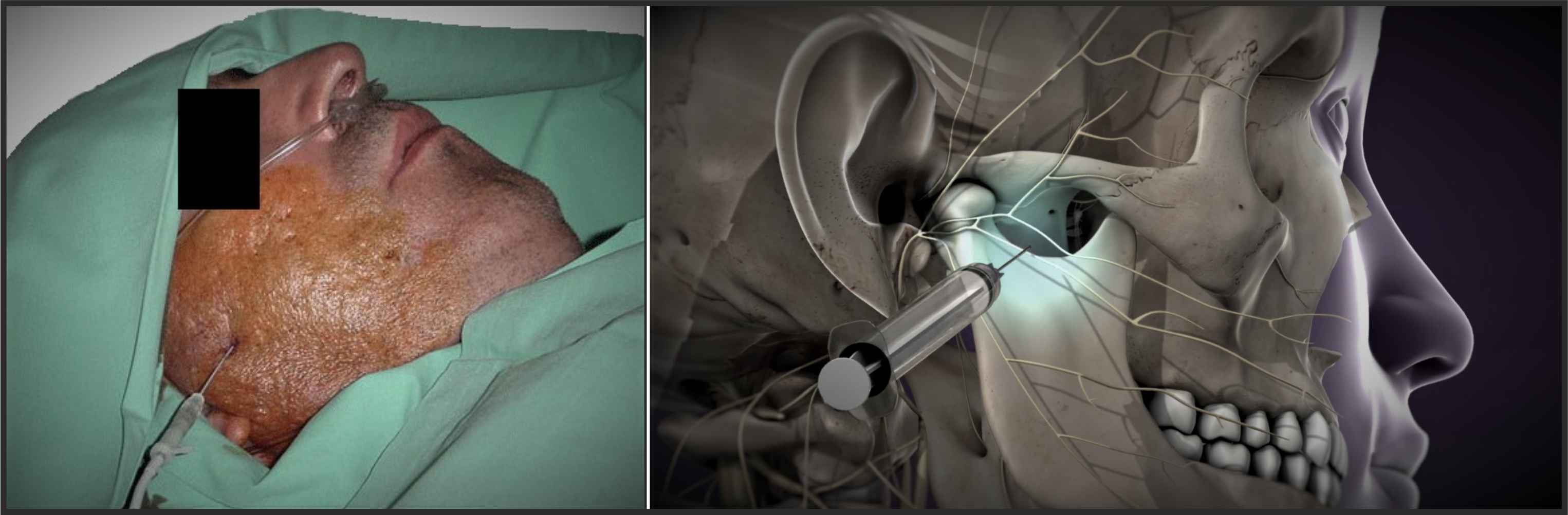
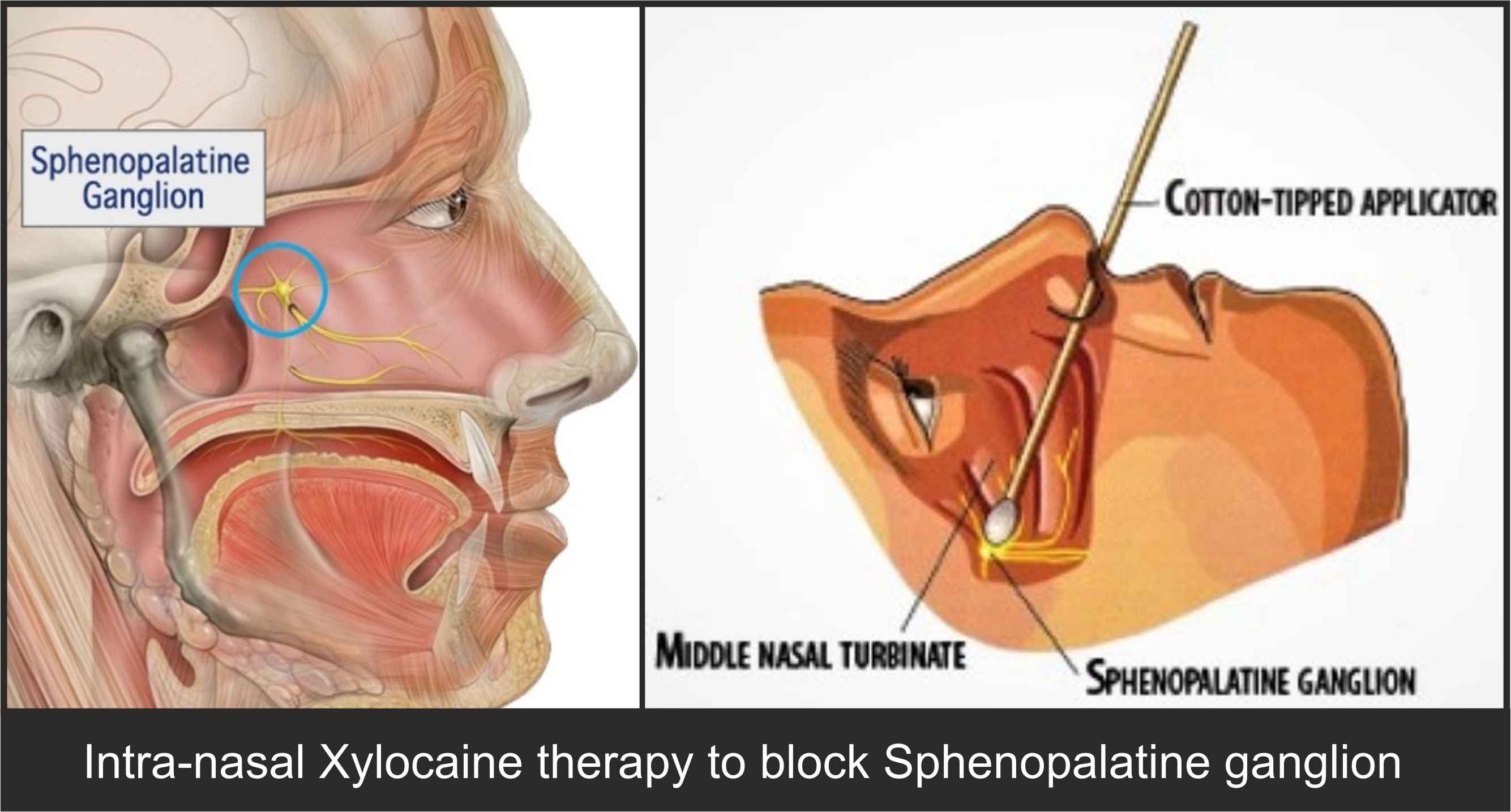
- 4 % or 10% Xylocaine intranasally to block Sphenopalatine Ganglion
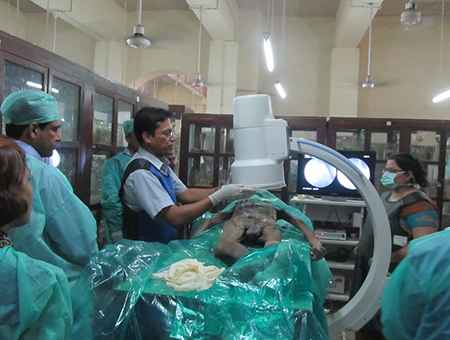
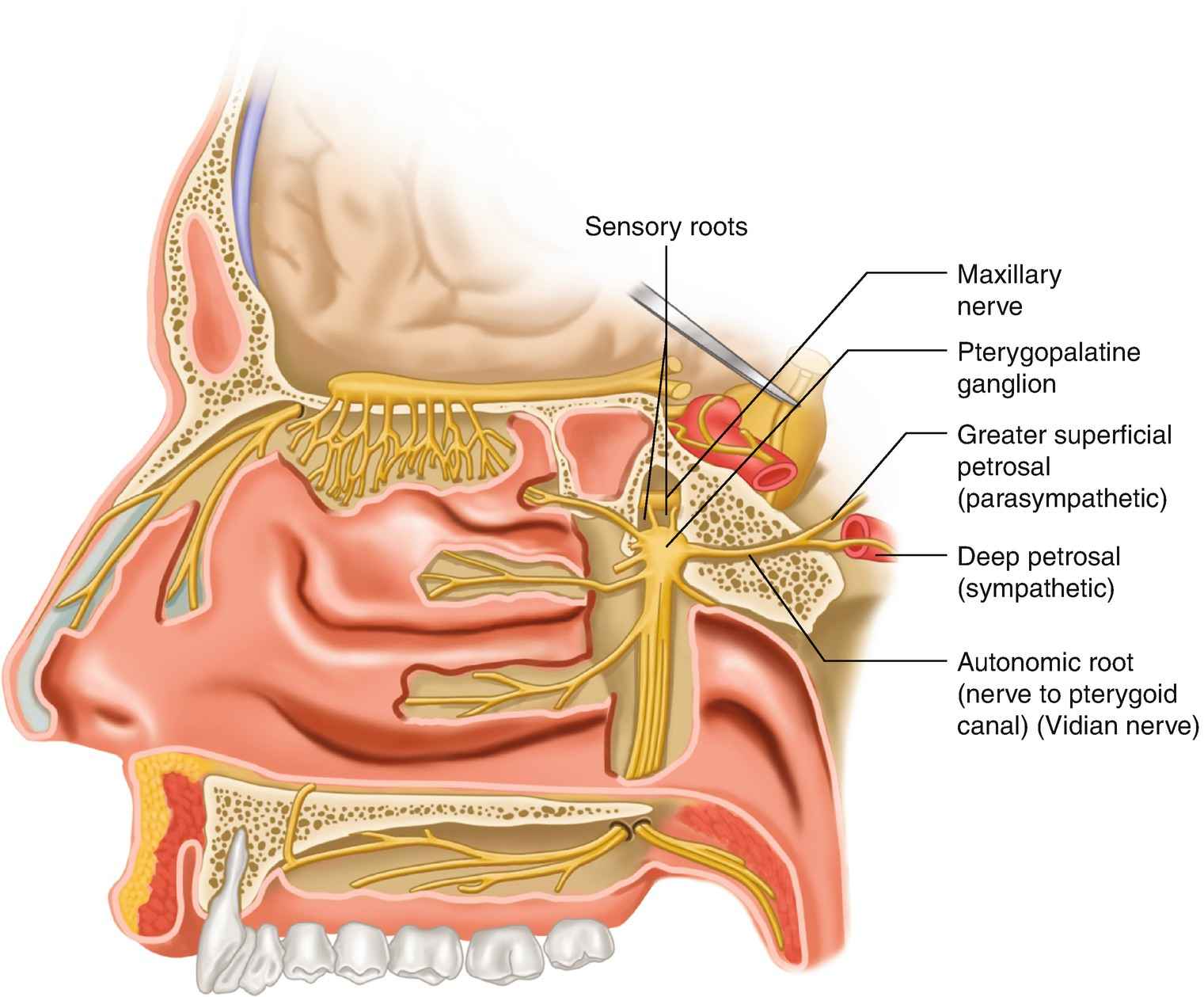
- Sphenopalatine or Pterigopalatine ganglion block by Radiofrequency ablation method