In the 1980s, the complex diagnosis of “failed back surgery syndrome (FBSS)” entered the medical literature. This unusual nomenclature refers to an unfortunate group of patients who, having undergone surgical treatment for a back problem, usually end up in worse condition than when they first sought medical care for the disorder.
After one or more laminectomies, spinal fusion, artificial disk implantation, bone growth electrical stimulation, and other operative procedures,[8] these factors may include one or more of the following diagnoses:
After one or more laminectomies, spinal fusion, artificial disk implantation, bone growth electrical stimulation, and other operative procedures,[8] these factors may include one or more of the following diagnoses:
- Recurrent disk herniation
- Nerve root compressed by scarring
- Herniation of adjacent disk
- Facetectomy
- Arachnoiditis
|
|

DIAGNOSIS
A complete, detailed history, including diagnostic tests, adverse events, and attempted therapeutic modalities, described chronologically, is desirable. Specific tracking of the time of appearance of symptoms in relation to one of the operations performed not only may help to determine the cause of the FBSS but also may assist in considering certain therapeutic modalities that have not been of benefit in the past.
Repeated operations may produce both axial and radicular pain that may be caused by progression or overgrowth of a previous spinal fusion or hypertrophic osteophyte that may coexist with peridural scarring, thus significantly compressing the dural contents. Although bonyand ligamentum compression may be mechanically reduced, pain relief would likely be minimal.
Repeated operations may produce both axial and radicular pain that may be caused by progression or overgrowth of a previous spinal fusion or hypertrophic osteophyte that may coexist with peridural scarring, thus significantly compressing the dural contents. Although bonyand ligamentum compression may be mechanically reduced, pain relief would likely be minimal.
- TGF - B ( Transforming Growth Factor beta) : Stimulates collagen synthesis
- BFGF (Basic Fibroblastic Growth Factor) : Promotes growth and differentation of chondrocytes
- PDGFa-b (Platelet Derived Growth Factor) : Regulates collagen synthesis
- EGF (Epidermal Growth Factor) : Stimulates collagen synthesis
- VEGF (Vascular Endothelial Growth Factor) : Increases vessel regeneration and permeability
- CTGF (Connective Tissue Growth Factor) : Stimulates cartilage regeneration

SYMPTOMS MAY BE CLASSIFIED AS FOLLOWS :
- Mechanical, noted as increased back pain when standing, walking, or sitting, including referred pain, muscle spasms, pain in the hips or sacroiliac joints, and bone friction, as in pseudarthrosis.
- Neurologic, including headaches, electrical shock–like pain, burning, lacerating pain from stretching of the dural sac or the nerve roots, numbness, and weakness not following a dermatome path; symptoms indicate alterations of proprioception such as dizziness, tinnitus, a positive Romberg sign, and loss of balance
- Functional, implying dysfunction of bladder, bowel, sexual activities, and autonomic dysfunction (e.g., excessive sweating, heat intolerance, hypertension)
- Aggregated, caused by other related illnesses such as diabetic neuropathy, rheumatoid arthritis, and lupus erythematosus
- Psychogenic, such as fears, depression, anxiety, hopelessness, insomnia, and suicidal ideation
- Radicular, including pain and sensory alteration (e.g., numbness, tingling, formication) and weakness along a specific dermatome, usually resulting from extradural compression of a nerve root
FUNCTIONAL IMPROVEMENT
- Improvement in physical activities and exercise tolerance
- Reduction in narcotic use
- Reduction in healthcare consumption
- Return to work
- Pain reduction
GUIDE TO DIAGNOSIS AND THERAPY FOR FAILED BACK SURGERY SYNDROME
|
|
|
|
HISTORY & PHYSICALS EXAMINATION
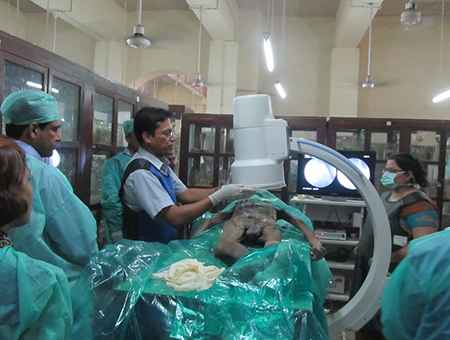
- Epidural adhesiolysis is one of the most promising treatment in Epidural scarring.
- Spinal Cord Stimulation is one of the most effective mode of treatment in specific cases.