
Anatomical components:
- Bones: Occiput, Atlas and Axis
- Joints: Atlanto-occipital joint (C0-C1) and Atlanto-axial joint (C1-C2)
- Ligaments: Apical ligament, Alar ligaments, Transverse ligaments, tectorial membrane, capsular ligaments of both Co-C1 and C1-C2 joints on both sides
Cervicogenic headache / CCJ syndrome:
Cervicogenic headaches (CGH) usually happens due to referred pain from upper cervical facet joints due to whiplash injuries and other degenerative and inflammatory causes of cervical musculoskeletal structures where C2-3 joint is one of the common pain generators present almost in 53% cases but atlanto-occipital joint (AOJ) and atlanto-axial joints (AAJ) can also be a source of pain in CGH and responsible for other unusual symptoms.
Craniocervical junction disorders cause different unusual symptoms besides neck pain, headache and musculoskeletal symptoms such as imbalance, Dizziness, vertigo, unsteady walking or gait disturbances, blurring vision or rapid eye movements (nystagmus), palpitations, tinnitus, difficulty in swallowing (dysphagia), sleep apnoea or irregular breathing, etc., which slowly develop depression in many patients. Many times, radiologically patients are normal but symptoms are tremendously affecting their day-to-day life.
Surprisingly, most of the patients are young who are suffering from CCJ syndrome and their symptoms are mostly same. Most of them have developed these symptoms due to any of the following reasons:
- After a which lash injury
- Some minor neck injury
- After continuous computer work
- After carrying heavy weight on their head
- After some neck physiotherapy
- After neck manipulation by chiropractors
- Ligament laxity from childhood
- Arthritic changes in CCJ
- Due to some unknow reasons
Many times, radiologically CCJ instability is not very prominent for which Neurologists / Neurosurgeons / Spine surgeons don’t advise to operate. On the other hand, when conservative methods fail to support these patients, then many times patients are blamed as if they are suffering with some psychological issues.
There are some hypotheses for this CCJ syndrome that due to ligament laxity of the different ligaments at this joint complex, highly sensitive brainstem / spinal cord get irritated with the specific movements of the head / neck gives these unusual symptoms besides CGH / neck pain / muscle stiffness, etc.
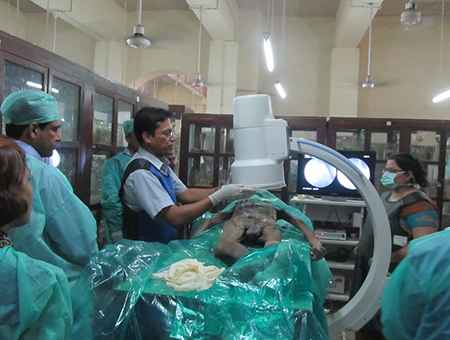
In Digital Motion X-ray (DMX) we can see the instability of C1-C2 / C0-C1. Though availability of DMX is a problem in most of the countries, but with some logical sense I have developed a method by which in every standard operation theatre DMX can be done with the help of Fluoroscopy Machine (Se the video below)
Regeneration therapy (PICL) of these ligaments at the CCJ for their strengthening may help the patients to recover from this problem.
Usually when all possible conservative therapies don’t satisfy the patients and there is no obvious pathology seen on MRI / CT cervical spine, I prefer to give PRP therapy of the following structures:
- 1. Atlanto-Axial joint injection (both sides)
- 2. Atlanto-occipital joint injection (both sides)
(Both these procedures are performed under fluoroscopy-guidance under local anaesthesia on prone position.) - 3. Transverse Ligament (TL)
- 4. Alar ligaments & Apical ligament (ALs)
(Both these procedures are performed under fluoroscopy guidance under deep sedation
If only pain is restricted to occipital area due to C0-C1/C1-C2 joint problems but no other unusual symptoms are affecting the patients, then I try to avoid the PRP therapy of TL and Als.
Regarding number of sittings, I don’t prefer to mention many sittings. I ask the patients, if they have these kinds of symptoms, you take one shot of all combined injections and see for one or two months. If you feel any positive results (feeling), then you definitely come for repeat injection as per need.
No-one can give any guaranty on this management. If it works well with your body, you can take repeat injections as per need.
But from my personal experience, many patients are getting satisfied with this Regenerative therapy (PICL).
On account of the close proximity of the vital structures like vertebral arteries and dense venous plexus, spinal cord with meninges this block should be restricted not only to patients who really need it, but also to experienced hands.